To commemorate the 20th anniversary of the implementation of the Oregon Death with Dignity Act, we are featuring stories of those who in 1997 campaigned against the repeal of the law adopted by Oregon voters 3 years before and who continue to advocate for assisted dying laws nationwide. Today we are featuring Nora Miller, a Death with Dignity advocate in Portland, Oregon. In 1999, Miller’s husband, Rick, used the Oregon law to hasten his death.
*
The landmark 1994 Measure 16 campaign that led to the passage of the Oregon Death with Dignity Act was spearheaded and led by the strategic acumen and dedication of the Oregon Right to Die Political Action Committee team. But those involved in the campaign, including the PAC’s campaign manager and Death with Dignity National Center consultant, Geoff Sugerman, say that they could not have achieved victory without the help of numerous volunteers.
In our interview with Sugerman, he recalled one volunteer in particular whose passion and positive spirit, even as he was battling terminal cancer, contributed greatly to the campaign.
Emerson Hoogstraat, a retired Portland State University finance professor, lent his talents to the PAC’s efforts from its early days up to the November 8, 1994 election where voters approved the Oregon Death with Dignity Act. He and his wife, Dorothy, appeared in national publications and in Oregon Right to Die’s television ads. He died March 23, 1995, before he could use the law for which he had fought so passionately.
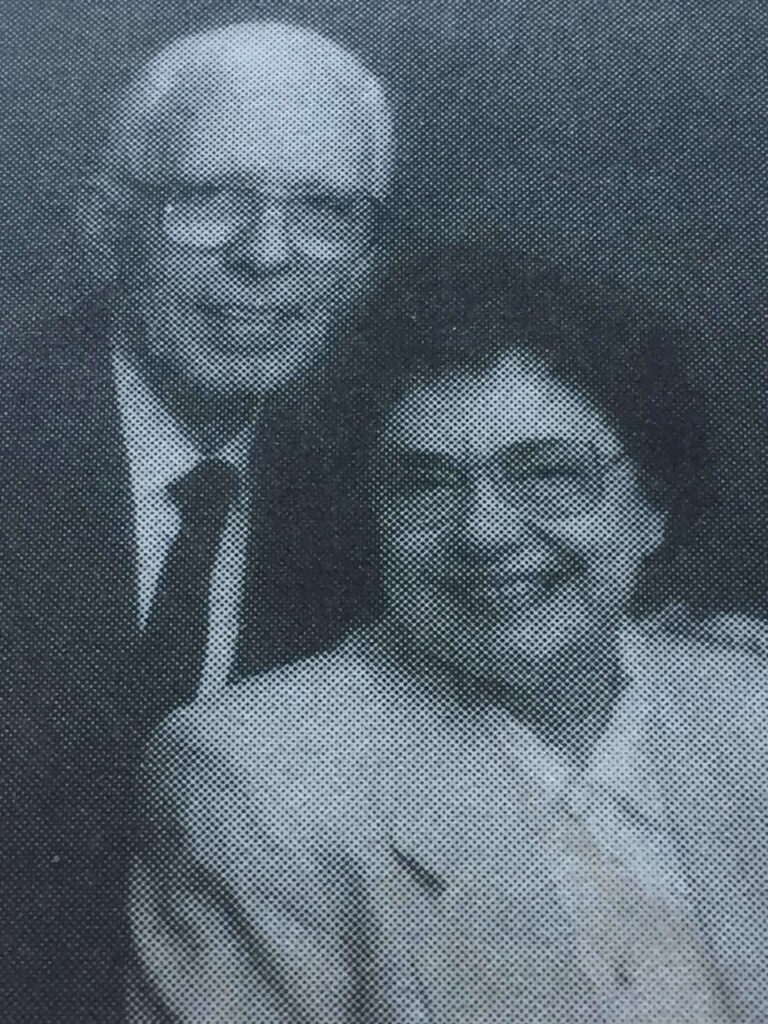
During the 1997 Measure 51 campaign, Dorothy provided emotional testimony before the Oregon House Judiciary Committee about her husband’s illness and advocacy for the Oregon law. (Our Board President, George Eighmey, was Vice Chairman of the House Judiciary Committee at the time. Read George’s story here.) She also wrote a statement for the 1997 Oregon Voter’s Pamphlet urging Oregonians to vote no on 51, the measure that if passed would have repealed the law.
“’In his final months, Emerson lived in agony, unable to use the law he helped to pass to end his own suffering,” Dorothy wrote. ”My husband of 40 years died exactly the death he feared because opponents stopped the Death With Dignity law in court.”
In a fall 1995 issue of the Oregon Report, published by our predecessor organization, the Oregon Death with Dignity Legal Defense and Education Center (ODLDEC), Kristin Reese, then ODLDEC’s office manager, penned a beautiful tribute to Emerson. Below is an excerpt from her piece, “Emerson’s Garden.”
Through the course of the campaign for Measure 16, many people became involved on a number of levels, and for a variety of reasons. But few were as outspoken and emotional about choice in dying as Emerson Hoogstraat.
I remember the first time Emerson came to our office to volunteer. He was a mountain of a man, strong and tall in stature. His booming voice was unmistakable and authoritative. He wanted to be an integral part of the campaign and use his expertise in finance. Emerson had prostate cancer and wanted to have a choice if and when he became terminal. He came every day, to process contributions and, in the process, lift our spirits with his sparkling wit.
He would never talk about his illness. “There will be plenty of time to talk about that later,” he’d say. “We’ve got to win this thing first.
I would look at Emerson in action and marvel, when I knew he was so sick. He was always jovial and never complained.
In early September [1994], he came to me and asked if I could find a replacement for him. He and his wife Dorothy were going on vacation, but he’d be back in a couple of weeks. …He never returned to work for the campaign. There were all kinds of complications with his cancer.
He was still involved, representing the campaign to the media, but he wouldn’t let them call him terminal. As far as he was concerned, he was still fighting.
He was in one of our television ads. “If I’m terminally ill, I’ll decide” was his line in the ad. How characteristic. He was so independent and outspoken and it was his choice to make, wasn’t it? Or at least, it should have been.
Just after the election, Emerson’s cancer moved into his bones. He would call the office just to check in from time to time. I always enjoyed talking with him. He still wasn’t complaining, except that he wished he was able to do more for the legal defense of the Act. It was frustrating for him, and all of us, that the law we had fought so hard to pass was being pre-empted by a “bunch of fanatics” with no business taking away the choice Oregonians made at the ballot box.
When I went to see him on the day he died, he was sleeping, but as I talked, I could feel his spirit there with me. I reminisced and cried and wished his suffering would end. Emerson died March 23, 1995 at home with his loved ones around him, but with little relief from his suffering. They may have been able to take away his choice, but they could never diminish his spirit.
We planted a wildflower garden in the front of the [ODLDEC] office, and we dedicated it to Emerson’s memory. He was always working in his yard at home and loved being surrounded by the beauty of the outdoors. I know he’s looking down on the flowers in Emerson’ Garden, smiling. He will always be here with us.